
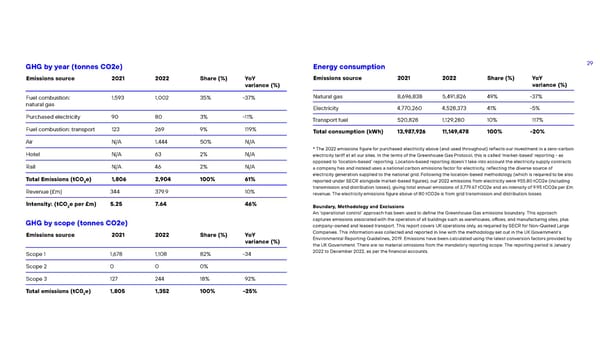
29 GHG by year (tonnes CO2e) Emissions source 2021 2022 Share (%) YoY variance (%) Fuel combustion: natural gas 1,593 1,002 35% -37% Purchased electricity 90 80 3% -11% Fuel combustion: transport 123 269 9% 119% Air N/A 1,444 50% N/A Hotel N/A 63 2% N/A Rail N/A 46 2% N/A Total Emissions (tCO 2 e) 1,806 2,904 100% 61% Revenue (£m) 344 379.9 10% Intensity: (tCO 2 e per £m) 5.25 7.64 46% Energy consumption Emissions source 2021 2022 Share (%) YoY variance (%) Natural gas 8,696,838 5,491,826 49% -37% Electricity 4,770,260 4,528,373 41% -5% Transport fuel 520,828 1,129,280 10% 117% Total consumption (kWh) 13,987,926 11,149,478 100% -20% GHG by scope (tonnes CO2e) Emissions source 2021 2022 Share (%) YoY variance (%) Scope 1 1,678 1,108 82% -34 Scope 2 0 0 0% Scope 3 127 244 18% 92% Total emissions (tC0 2 e) 1,805 1,352 100% -25% * The 2022 emissions figure for purchased electricity above (and used throughout) reflects our investment in a zero-carbon electricity tariff at all our sites. In the terms of the Greenhouse Gas Protocol, this is called ‘market-based’ reporting - as opposed to ‘location-based’ reporting. Location-based reporting doesn’t take into account the electricity supply contracts a company has and instead uses a national carbon emissions factor for electricity, reflecting the diverse source of electricity generation supplied to the national grid. Following the location-based methodology (which is required to be also reported under SECR alongside market-based figures), our 2022 emissions from electricity were 955.80 tCO2e (including transmission and distribution losses), giving total annual emissions of 3,779.67 tCO2e and an intensity of 9.95 tCO2e per £m revenue. The electricity emissions figure above of 80 tCO2e is from grid transmission and distribution losses. Boundary, Methodology and Exclusions An ‘operational control’ approach has been used to define the Greenhouse Gas emissions boundary. This approach captures emissions associated with the operation of all buildings such as warehouses, offices, and manufacturing sites, plus company-owned and leased transport. This report covers UK operations only, as required by SECR for Non-Quoted Large Companies. This information was collected and reported in line with the methodology set out in the UK Government’s Environmental Reporting Guidelines, 2019. Emissions have been calculated using the latest conversion factors provided by the UK Government. There are no material omissions from the mandatory reporting scope. The reporting period is January 2022 to December 2022, as per the financial accounts.
 Positive Business Report Page 28 Page 30